

How To Set Realistic Walking Goals

Learn how to define goals based on fitness level, break goals into weekly targets, increase difficulty safely, and evaluate and reset goals each month.
Setting the right walking goals makes the difference between success and frustration. Goals that are too ambitious lead to burnout and discouragement. Goals that are too easy do not create meaningful change. The sweet spot is goals that challenge you while remaining achievable.
Here is how to set realistic walking goals that you can actually stick to.
How to Define Goals Based on Fitness Level
Start where you are, not where you want to be.
Assess Your Current Activity
Know your baseline:
Track before setting goals:
- Wear a step counter for one week
- Do not change your behavior
- Just observe and record
- Find your natural average
What to measure:
- Average daily steps
- Highest and lowest days
- Patterns (weekday vs. weekend)
- Current activity level
Common baselines:
- Sedentary: 2,000-4,000 steps
- Lightly active: 4,000-6,000 steps
- Moderately active: 6,000-8,000 steps
- Active: 8,000-10,000 steps
- Very active: 10,000+ steps
Research shows that the average American adult takes between 3,000 and 4,000 steps per day. Knowing your personal baseline is essential for setting goals that work for you.
Consider Your Physical Condition
Factor in your health:
Age considerations:
- Younger adults can progress faster
- Older adults may need slower progression
- Recovery time increases with age
- Listen to your body
Health conditions:
- Joint issues may limit intensity
- Heart conditions require medical guidance
- Chronic conditions need accommodation
- Consult healthcare provider if needed
Current fitness:
- How do you feel after walking?
- Any pain or discomfort?
- Energy levels throughout day
- Sleep quality
Set Your Initial Goal
Choose a realistic starting point:
The 10-20% rule:
- Add 10-20% to your current average
- Example: 4,000 steps average = 4,400-4,800 goal
- Challenging but achievable
- Room for growth
Alternative approach:
- Add 1,000-2,000 steps to baseline
- More straightforward calculation
- Works well for most people
- Adjust based on results
First goal examples:
- Baseline 3,000 → Goal 4,000
- Baseline 5,000 → Goal 6,000
- Baseline 7,000 → Goal 8,000
Avoid Common Mistakes
Do not set yourself up for failure:
Starting too high:
- Jumping from 3,000 to 10,000
- Unsustainable and discouraging
- High injury risk
- Leads to quitting
Copying others:
- Your friend's goal may not suit you
- Different bodies, different needs
- Focus on your own progress
- Comparison is counterproductive
Ignoring reality:
- Not accounting for busy schedule
- Forgetting about weather
- Overlooking physical limitations
- Being unrealistic about time
How to Break Goals Into Weekly Targets
Make big goals manageable.
Weekly Step Totals
Think in weeks, not just days:
Why weekly matters:
- Allows for variation
- Accounts for busy days
- Reduces daily pressure
- More sustainable approach
Calculating weekly target:
- Daily goal x 7 = weekly target
- Example: 7,000 x 7 = 49,000 weekly
- Allows flexibility in distribution
- Some days higher, some lower
Weekly distribution example:
- Monday: 6,000 (busy day)
- Tuesday: 8,000 (good day)
- Wednesday: 7,000 (average)
- Thursday: 5,000 (very busy)
- Friday: 7,000 (average)
- Saturday: 10,000 (free time)
- Sunday: 8,000 (active day)
- Total: 51,000 (meets weekly goal)
Daily Minimums and Maximums
Set boundaries:
Minimum daily steps:
- Never go below this number
- Protects the habit
- Even on worst days
- Example: 3,000 minimum
Target daily steps:
- Your primary goal
- What you aim for most days
- Example: 7,000 target
Stretch goal:
- For days with extra time
- Bonus achievement
- Not required
- Example: 10,000 stretch
Having a minimum, target, and stretch goal gives you flexibility. On tough days, hitting your minimum is still a win. On great days, you can push for your stretch goal.
Weekly Check-ins
Review and adjust weekly:
What to review:
- Did you hit weekly total?
- How many days met daily target?
- What worked well?
- What was challenging?
Questions to ask:
- Was the goal realistic?
- Do you need to adjust?
- What obstacles appeared?
- How can next week be better?
Building Week Over Week
Progressive weekly goals:
Week 1-2:
- Focus on consistency
- Hit minimum every day
- Learn your patterns
- Build the habit
Week 3-4:
- Increase daily target slightly
- Aim for more target days
- Fewer minimum days
- Growing confidence
Month 2:
- Solidify new baseline
- Consider another increase
- Maintain consistency
- Celebrate progress
How to Increase Difficulty Safely
Progress without injury or burnout.
The Gradual Progression Principle
Slow and steady wins:
Safe increase rate:
- 10% increase per week maximum
- 500-1,000 steps at a time
- Allow body to adapt
- Sustainable long-term
Why gradual works:
- Muscles adapt over time
- Joints need time to strengthen
- Energy systems improve
- Habits solidify
Rushing leads to:
- Overuse injuries
- Fatigue and burnout
- Discouragement
- Quitting
Signs You Are Ready to Increase
Know when to level up:
Physical signs:
- Current goal feels easy
- No soreness or fatigue
- Energy levels good
- Sleeping well
Behavioral signs:
- Consistently hitting goal
- Often exceeding goal
- Wanting more challenge
- Feeling bored with current level
Timing:
- At least 2 weeks at current level
- Consistent success
- No recent illness or injury
- Ready mentally and physically

Steps App
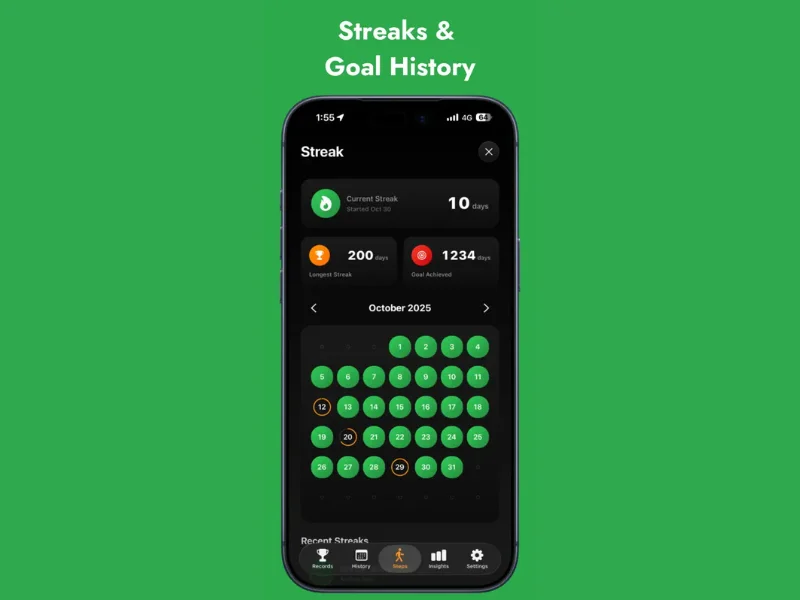
FreeSteps App helps you track your progress over time with beautiful charts and insights. See your daily, weekly, and monthly trends to know when you are ready to increase your goals. The app makes it easy to spot patterns and celebrate your improvements as you gradually build your walking habit.
How to Increase
Methods for progression:
Add steps:
- Increase daily goal by 500-1,000
- Keep weekly structure same
- Monitor how it feels
- Adjust if needed
Add time:
- Extend walks by 5-10 minutes
- Add one more short walk
- Increase walking pace
- Same routes, more movement
Add intensity:
- Walk faster
- Add hills or stairs
- Carry light weights
- Interval walking
When to Hold Steady
Sometimes maintenance is the goal:
Hold your level when:
- Life is particularly busy
- Recovering from illness
- Dealing with injury
- Stressed or overwhelmed
Maintenance is success:
- Not every phase is growth
- Consistency matters most
- Protect your habit
- Resume progression later
If you experience persistent pain, unusual fatigue, or any concerning symptoms, stop increasing and consult a healthcare provider. Pushing through pain leads to injury.
How to Evaluate and Reset Goals Each Month
Regular assessment keeps you on track.
Monthly Review Process
Structured evaluation:
Step 1: Gather data
- Total monthly steps
- Daily average
- Goal achievement rate
- Best and worst weeks
Step 2: Assess results
- Did you meet your goals?
- What percentage of days?
- How do you feel physically?
- How do you feel mentally?
Step 3: Identify patterns
- What days are hardest?
- What helps you succeed?
- What obstacles appear?
- What motivates you?
Step 4: Decide next steps
- Increase, maintain, or decrease?
- What adjustments needed?
- New strategies to try?
- Goals for next month?
Questions for Monthly Evaluation
Dig deeper:
About your goals:
- Were they realistic?
- Were they challenging enough?
- Did they motivate you?
- Do they still align with your why?
About your behavior:
- What habits worked?
- What habits need work?
- What surprised you?
- What are you proud of?
About your life:
- Did life circumstances change?
- Any upcoming changes to plan for?
- Do goals fit your current life?
- What support do you need?
Resetting Goals
How to adjust:
If you exceeded goals:
- Increase by 10-15%
- Add new challenge elements
- Consider stretch goals
- Celebrate your success
If you met goals:
- Consider slight increase
- Or maintain and solidify
- Refine your approach
- Build on success
If you fell short:
- Analyze why honestly
- Lower goals if needed
- Address obstacles
- Try new strategies
If you struggled significantly:
- Reduce goals substantially
- Focus on consistency first
- Remove pressure
- Rebuild gradually
Seasonal Adjustments
Account for changing conditions:
Summer:
- Longer daylight hours
- Better weather (usually)
- May increase goals
- Outdoor opportunities
Winter:
- Shorter days
- Weather challenges
- May need to adjust down
- Indoor alternatives
Holidays and travel:
- Temporary goal adjustments
- Minimum focus
- Plan for disruption
- Return to normal after
Long-Term Goal Setting
Think beyond the month:
Quarterly goals:
- Where do you want to be in 3 months?
- Milestone achievements
- Fitness improvements
- Habit solidification
Annual goals:
- Long-term vision
- Major achievements
- Lifestyle changes
- Health improvements
Life goals:
- Why does walking matter?
- What does success look like?
- How does walking fit your life?
- What legacy do you want?
Sample Goal-Setting Framework
Putting it all together:
Starting point:
- Current average: 4,000 steps
- Physical condition: Sedentary but healthy
- Available time: 30 minutes daily
Initial goals:
- Daily minimum: 3,000 steps
- Daily target: 5,000 steps
- Weekly total: 35,000 steps
Month 1:
- Focus on consistency
- Hit minimum every day
- Target most days
- Build the habit
Month 2:
- Increase target to 6,000
- Weekly total: 42,000
- Same minimum
- Add variety
Month 3:
- Increase target to 7,000
- Weekly total: 49,000
- Increase minimum to 4,000
- Solidify routine
Month 4-6:
- Continue gradual increases
- Target 8,000-10,000 eventually
- Maintain consistency
- Adjust as needed
The Bottom Line
Setting realistic walking goals requires honest self-assessment, gradual progression, and regular evaluation. Start from your actual baseline, not an arbitrary number. Break big goals into weekly and daily targets with flexibility built in. Increase difficulty slowly and only when ready. Review and reset goals monthly to stay on track and adapt to changing circumstances. The goal is sustainable progress, not perfection.
Key takeaways:
- Assess your current baseline before setting goals
- Add 10-20% to your average as initial goal
- Break goals into weekly targets for flexibility
- Set minimum, target, and stretch daily goals
- Increase by 10% maximum per week
- Wait until current goal feels easy before increasing
- Review and adjust goals monthly
- Account for seasonal and life changes
- Maintenance phases are valuable
- Focus on consistency over perfection
Start where you are. Progress at your pace. Achieve lasting results.
References
Free calculators for this topic
Related Posts
How To Set Daily Step Goals On Your Phone
Learn how to set step goals in the iPhone Health app, how to set goals in other fitness apps, how to choose realistic and safe targets, and how to monitor progress each week.

Recommended Steps Per Day by Age: What the Research Says
Step targets differ significantly by age. Children need 12,000–16,000 steps; adults 7,000–10,000; seniors 6,000–8,000. See the full evidence-based chart by age group.

How Walking Can Improve Your Sleep Quality
Discover how regular walking impacts sleep cycles, the best times of day to walk for better sleep, how walking reduces stress before bedtime, and how to build a sleep-friendly walking routine.