
Creative Ways to Get More Steps at a Desk Job: 15+ Actionable Ideas

Discover practical ways to add 2,000-3,000 steps to your workday without leaving the office. Learn why sitting harms health and how to track workday vs non-work steps.
Desk jobs are step killers. You sit for 8 hours, walk to the bathroom a few times, and end the day with 2,000 steps. Meanwhile, your step goal sits at 10,000, mocking you.
But it does not have to be this way. With some creativity, you can add 2,000 to 3,000 steps to your workday without disrupting your productivity.
Why Sitting All Day Harms Health (Even If You Exercise)
Before diving into solutions, let us understand the problem.
The Dangers of Prolonged Sitting
Research shows that sitting for extended periods is harmful even if you exercise regularly. A study in the Annals of Internal Medicine found that:
- Adults who sit for more than 8 hours per day have a 59 percent higher risk of death compared to those who sit less than 4 hours
- Regular exercise reduces but does not eliminate this risk
- Breaking up sitting time with movement significantly improves health outcomes
The problem is not just lack of exercise. It is the continuous, uninterrupted sitting itself.
What Happens When You Sit
During prolonged sitting:
- Metabolism slows down
- Blood sugar regulation worsens
- Blood circulation decreases
- Muscles become inactive
- Calorie burning drops to minimal levels
Even a brief walk every hour can counteract many of these effects.
The phrase "sitting is the new smoking" is not hyperbole. Research consistently shows that prolonged sitting is an independent risk factor for heart disease, diabetes, and early death.
The Solution: Movement Snacks
You do not need long exercise sessions to combat sitting. Short bursts of movement throughout the day, sometimes called "movement snacks," are highly effective.
A study in the British Journal of Sports Medicine found that breaking up sitting with 3-minute walks every 30 minutes improved blood sugar and blood pressure more than a single 30-minute walk.
Office-Friendly Ideas to Add 2,000 to 3,000 Steps
Here are practical ways to add steps during your workday:
Walking Meetings
Steps gained: 500 to 1,500 per meeting
Instead of sitting in a conference room, walk and talk. This works especially well for:
- One-on-one meetings
- Brainstorming sessions
- Phone calls and virtual meetings (with earbuds)
Walking meetings often lead to more creative thinking and better conversations.
Take the Stairs
Steps gained: 100 to 200 per trip
Always take stairs instead of elevators. If you work on a high floor:
- Take stairs for part of the way (walk up 3 floors, elevator the rest)
- Take stairs for going down (easier than up)
- Use bathroom on a different floor
Walk to Talk
Steps gained: 50 to 200 per conversation
Instead of sending an email or instant message, walk to your colleague's desk. This:
- Gets you moving
- Often resolves issues faster than email chains
- Builds better workplace relationships
Phone Call Walks
Steps gained: 300 to 600 per 10-minute call
Stand up and walk during phone calls. If you are on calls frequently, this adds up quickly. Use wireless earbuds or headphones for freedom of movement.
Set a rule: all phone calls are walking calls. This single habit can add 1,000+ steps per day if you take multiple calls.
Bathroom Breaks on Different Floors
Steps gained: 200 to 400 per trip
Use the bathroom on a different floor. Take the stairs both ways. This turns a necessary break into a step opportunity.
Walking Lunch Break
Steps gained: 1,000 to 2,000
Use part of your lunch break for walking:
- Walk to get lunch instead of ordering delivery
- Take a 10-minute walk after eating
- Walk around the building before returning to your desk
Even 10 minutes of walking adds 1,000 steps.
Parking Further Away
Steps gained: 200 to 500
Park at the far end of the parking lot. This adds steps at the beginning and end of your day with minimal time impact.
Walking to Public Transit
Steps gained: 500 to 1,500
If you use public transit:
- Get off one stop early
- Walk to a further stop
- Take a longer route to the station
Hourly Movement Breaks
Steps gained: 100 to 200 per break
Set a timer for every hour. When it goes off, stand up and walk for 2 to 3 minutes. Over an 8-hour day, that is 800 to 1,600 steps.
Walking While Waiting
Steps gained: 100 to 300
Walk while waiting for:
- The printer
- The microwave
- A meeting to start
- Your computer to update
Turn dead time into step time.
Desk Exercises That Include Steps
Steps gained: 50 to 100 per session
During brief desk breaks:
- March in place for 30 seconds
- Do walking lunges in an empty hallway
- Walk in a small circle while stretching
Water Bottle Strategy
Steps gained: 200 to 400
Use a small water bottle that requires frequent refills. Each trip to the water cooler adds steps and keeps you hydrated.
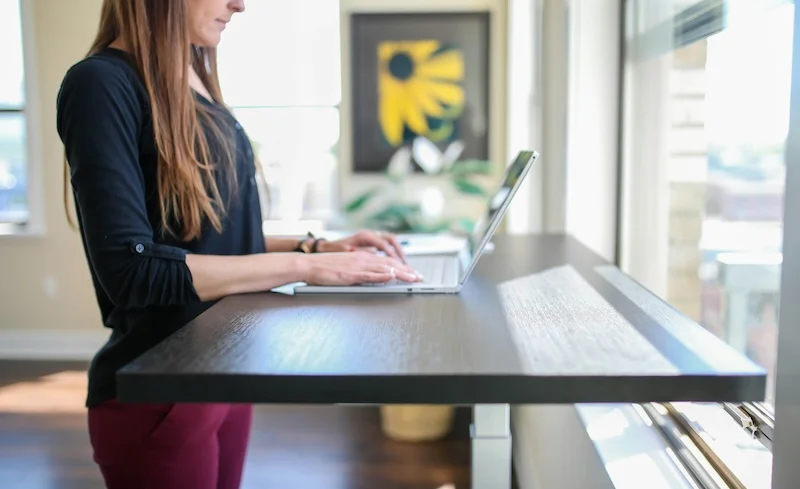
Standing Desk With Movement
Steps gained: Variable
If you have a standing desk, do not just stand. Shift your weight, take steps in place, and walk around periodically. Standing is better than sitting, but moving is better than standing.
Do not sacrifice productivity for steps. The goal is to integrate movement into your work, not to spend your day walking instead of working.
Before and After Work Walks
Steps gained: 1,000 to 3,000
Add walks at the edges of your workday:
- 10-minute walk before entering the office
- 10-minute walk after leaving
- Walk around the block during your commute
These walks also help you mentally transition between work and personal time.
Lunchtime Walking Group
Steps gained: 1,500 to 2,500
Start or join a lunchtime walking group. Social walking:
- Makes the time pass faster
- Creates accountability
- Builds workplace friendships
How to Negotiate Movement-Friendly Habits at Work
Some workplaces make movement easy. Others require negotiation.
Making the Case
If your workplace is not movement-friendly, frame the benefits in terms your employer cares about:
- Productivity: Movement breaks improve focus and creativity
- Health costs: Active employees have lower healthcare costs
- Morale: Movement improves mood and reduces stress
- Retention: Wellness programs attract and keep talent
Specific Requests
Consider asking for:
- Permission to take walking meetings
- A standing desk or desk converter
- Flexible break times for short walks
- A designated walking path or area
Leading by Example
Sometimes the best approach is to just start:
- Take your calls while walking
- Use stairs without making a big deal of it
- Invite colleagues on walking meetings
Others may follow your lead without any formal policy change.
Tracking Your Workday Steps vs Non-Work Steps
Understanding your activity patterns helps you improve them.
Why Separate Tracking Matters
Knowing how many steps you take during work versus outside work reveals:
- Where your step deficit comes from
- Which workday strategies are working
- How to balance work and personal activity
Many people are surprised to find that 70 to 80 percent of their steps come from outside work hours, meaning workday movement is their biggest opportunity.
How to Track Work Steps
Method 1: Time-Based Tracking
Note your step count at:
- Start of workday
- End of workday
- End of day
Calculate: Workday steps = End of workday count minus Start of workday count
Method 2: Location Awareness
Some fitness apps can show activity by time of day. Review your hourly step patterns to see when you are most and least active.

Steps App
FreeSteps App shows your step activity throughout the day, making it easy to see when you are moving and when you are sedentary. Use the insights to identify your low-activity work hours and target them for improvement.
Setting Workday Step Goals
Based on your tracking, set a specific workday goal:
- Current workday average: 1,500 steps
- Goal: 3,500 steps (adding 2,000)
- Strategy: Walking meetings, hourly breaks, stair use
Track progress weekly and adjust strategies as needed.
Sample Workday Step Schedule
Here is how to structure a high-step workday:
Total workday steps added: 3,900
Combined with baseline office movement (1,000 to 1,500 steps), this brings your workday total to 5,000+ steps.
The Bottom Line
Desk jobs do not have to destroy your step count. With intentional strategies, you can add 2,000 to 3,000 steps to your workday without sacrificing productivity.
The key principles:
- Break up sitting with frequent short walks
- Turn existing activities into step opportunities
- Track your workday steps separately to identify gaps
- Build movement into your work routine, not around it
Start with one or two strategies and add more over time. Before long, hitting your step goal will feel easy, even on the busiest workdays.
References
Free calculators for this topic
Related Posts

Walking to Lose Weight: The Complete Step & Calorie Chart
How many steps do you need to lose weight? This chart shows exactly how many steps to burn 1 lb, 5 lbs, and 10 lbs at every body weight, with a realistic timeline.

How Many Steps to Burn 500 Calories Walking?
Burning 500 calories walking takes roughly 10,000–17,500 steps for most adults. See the exact step count for your body weight and pace, plus a sample day plan.

How Many Steps to Burn 100 Calories Walking?
Burning 100 calories walking takes about 2,000–3,500 steps for most adults. Get the exact step count for your weight, plus tips to hit 100 calories faster.