

Daily Steps Needed To Maintain A Healthy Weight

Learn what research says about steps for weight maintenance, how lifestyle affects your ideal step count, how to find your personal maintenance range, and tools to help you stay on track.
You have reached your goal weight. Now what? Maintaining weight requires a different approach than losing it. Daily steps play a crucial role in keeping the weight off long-term.
Here is what you need to know about step counts for weight maintenance.
What Research Says About Steps for Maintenance
Science provides clear guidance on how many steps support weight maintenance.
The Key Studies
Multiple studies have examined the relationship between daily steps and weight maintenance:
National Weight Control Registry:
- Tracks people who have lost 30+ pounds and kept it off for 1+ year
- Most successful maintainers walk regularly
- Average activity level equals about 8,000-10,000 steps daily
JAMA Study (2020):
- Examined step counts and mortality
- Found significant health benefits at 7,000-8,000 steps
- Diminishing returns beyond 10,000-12,000 steps
Obesity Research:
- People who maintain weight loss are more active than those who regain
- Daily walking is the most common activity among maintainers
The Numbers
Research suggests these step ranges:
For most people, 7,000-10,000 daily steps provides a solid foundation for weight maintenance.
The National Weight Control Registry, which tracks long-term weight loss maintainers, found that 90% of successful maintainers exercise regularly, with walking being the most common activity.
Why Steps Work for Maintenance
Daily steps support maintenance through:
Consistent calorie burn:
- 7,000-10,000 steps burns 250-400 calories daily
- This offsets normal dietary fluctuations
- Provides buffer for occasional indulgences
Metabolic support:
- Regular movement prevents metabolic slowdown
- Helps maintain muscle mass
- Keeps energy expenditure stable
Habit reinforcement:
- Daily walking maintains healthy behavior patterns
- Reinforces identity as an active person
- Creates structure around food and activity
How Lifestyle Affects Your Ideal Step Count
Your optimal step count depends on your individual circumstances.
Job Type Matters
Your occupation significantly impacts baseline activity:
Sedentary jobs (desk work, driving):
- Natural daily steps: 2,000-4,000
- Need to add: 5,000-8,000 intentional steps
- Target total: 7,000-10,000 steps
Moderately active jobs (teaching, retail):
- Natural daily steps: 5,000-8,000
- Need to add: 2,000-4,000 intentional steps
- Target total: 8,000-10,000 steps
Active jobs (construction, nursing):
- Natural daily steps: 10,000-15,000
- May need less intentional walking
- Focus on maintaining current level
Age Considerations
Step targets may vary by age:
These are general guidelines. Individual capacity varies widely.
Dietary Habits
Your eating patterns affect how many steps you need:
If you eat moderately:
- 7,000-8,000 steps may suffice
- Less buffer needed for occasional treats
If you enjoy larger portions:
- 9,000-11,000 steps provides more buffer
- More activity offsets higher calorie intake
If you frequently eat out:
- Restaurant meals are often higher calorie
- 10,000+ steps helps compensate
Metabolism Factors
Individual metabolism affects requirements:
Higher metabolism:
- May maintain weight with fewer steps
- Often younger individuals
- Naturally fidgety or restless
Lower metabolism:
- May need more steps for maintenance
- Often after significant weight loss
- May run in families
Your metabolism is not fixed. Regular walking actually helps maintain a healthy metabolism over time. Consistency matters more than hitting a specific number.
Other Activity
Consider your total activity picture:
If you only walk:
- 8,000-10,000 steps is a good target
- Walking is your primary calorie burn
If you also exercise:
- 6,000-8,000 steps may be sufficient
- Gym workouts add additional calorie burn
- Walking supplements other activities
How to Find Your Personal Maintenance Step Range
Your ideal number is personal. Here is how to find it.
Step 1: Establish Your Baseline
Track your current situation:
- Weigh yourself (same conditions each time)
- Track daily steps for 2-4 weeks
- Calculate your average daily steps
- Note if weight is stable, increasing, or decreasing
If weight is stable, your current average is your maintenance level.
Step 2: Identify Your Range
Create a personal range based on your baseline:
Example:
- Baseline: 8,500 steps/day (weight stable)
- Lower limit: 7,500 steps (minimum for maintenance)
- Upper limit: 10,000 steps (for extra buffer)
- Range: 7,500-10,000 daily steps
Step 3: Test and Adjust
Monitor results over time:
If weight stays stable:
- Your range is correct
- Continue current habits
If weight increases:
- Add 1,000-1,500 steps daily
- Review dietary habits
- Reassess after 2-3 weeks
If weight decreases:
- You may be in a deficit
- Can reduce steps slightly if desired
- Or enjoy the extra buffer
Step 4: Account for Life Changes
Reassess when circumstances change:
- New job (more or less active)
- Seasonal changes (winter vs summer)
- Life events (stress, travel)
- Age-related changes
Your maintenance range may shift over time.
The Maintenance Range Approach
Instead of one fixed number, use a range:
This flexibility accommodates daily variation while maintaining overall consistency.
Tools and Apps to Help Stay on Track
Technology makes tracking easier than ever.
Why Tracking Matters
Tracking provides:
- Objective data on your activity
- Awareness of patterns
- Motivation to hit goals
- Early warning of declining activity
People who track their steps are more likely to maintain weight long-term.
iPhone Built-In Tracking
Your iPhone already tracks steps:
Apple Health app:
- Automatic step counting
- Daily, weekly, monthly views
- Trends over time
- Integrates with other apps
Dedicated Step Tracking Apps
Specialized apps offer more features:
Benefits of step apps:
- Visual goal progress
- Customizable targets
- Achievements and streaks
- Detailed insights
- Widgets for quick access

Steps App
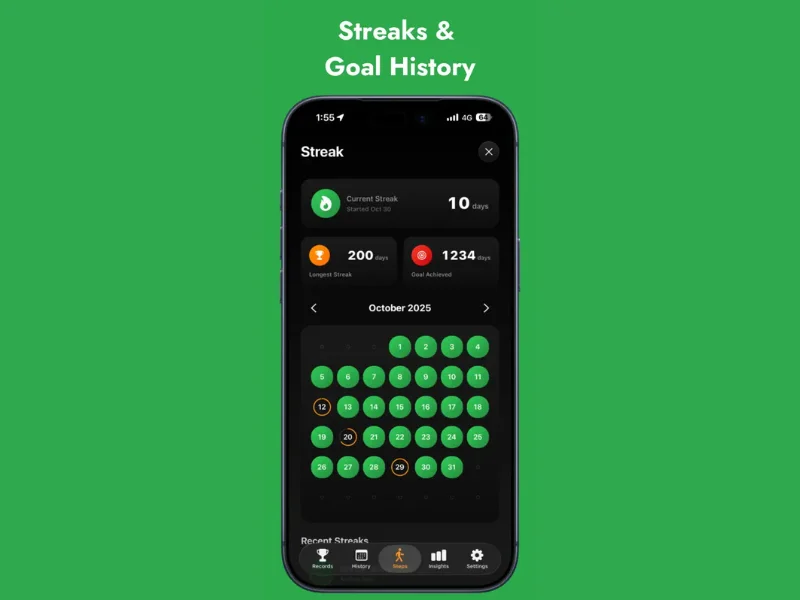
FreeSteps App provides everything you need for weight maintenance tracking. Set your personal step goal, see your progress with the animated step ring, and use the insights to spot patterns. The home screen widget keeps your goal visible throughout the day, and achievements celebrate your consistency.
What to Look For in a Tracking App
Choose an app that offers:
- Accurate step counting
- Easy goal setting
- Visual progress display
- Weekly and monthly trends
- Low battery impact
- Privacy protection
Using Widgets Effectively
Home screen widgets help by:
- Showing progress at a glance
- Reminding you of your goal
- Motivating action when behind
- Celebrating when you hit target
Place a step widget where you will see it frequently.
Setting Up Alerts
Consider notifications for:
- Daily goal reminders
- Midday progress check
- Streak maintenance
- Weekly summary
Do not overdo it; too many notifications become annoying.
Building Sustainable Maintenance Habits
Long-term success requires sustainable habits.
Make Walking Automatic
Remove decision-making:
- Walk at the same times daily
- Have set routes for regular walks
- Keep walking shoes ready
- Make walking non-negotiable
When walking is automatic, you do not need motivation.
Create Triggers
Link walking to existing habits:
- After morning coffee: 10-minute walk
- After lunch: 15-minute walk
- After dinner: 20-minute walk
- During phone calls: Walk and talk
Triggers make walking happen without thinking.
Build in Flexibility
Rigid plans break. Flexible plans last:
- Have indoor options for bad weather
- Know your minimum acceptable days
- Accept that some days will be lower
- Focus on weekly averages, not daily perfection
Plan for Obstacles
Anticipate challenges:
Travel:
- Walk in airports
- Explore new cities on foot
- Use hotel gyms or stairs
Illness:
- Accept temporary reduction
- Return gradually
- Do not try to "make up" missed days
Busy periods:
- Have a minimum step target
- Break walks into smaller chunks
- Prioritize even 10 minutes
The biggest threat to maintenance is letting temporary disruptions become permanent changes. After any break, return to your walking routine as quickly as possible.
Weekly and Monthly Reviews
Regular check-ins prevent drift:
Weekly:
- Review average daily steps
- Check weight trend
- Note any challenges
- Plan for upcoming week
Monthly:
- Look at 4-week step average
- Assess weight stability
- Celebrate consistency
- Adjust goals if needed
Long-Term Maintenance Mindset
Success requires the right perspective.
This Is Forever
Weight maintenance is not a phase:
- Walking is part of your lifestyle
- Daily steps are a permanent habit
- Health requires ongoing attention
- This is who you are now
Progress Over Perfection
Aim for consistency, not perfection:
- 7 days at 7,000 beats 3 days at 15,000
- Sustainable habits trump heroic efforts
- Good enough is good enough
- Small consistent actions compound
Celebrate Stability
Maintenance success deserves recognition:
- Every month at stable weight is a win
- Every year of maintenance is an achievement
- Stability takes effort
- Appreciate your consistency
Adapt Over Time
Your needs will change:
- Adjust step targets as you age
- Modify for life circumstances
- Stay flexible while staying consistent
- Walking can adapt with you
Sample Maintenance Framework
Here is a practical framework for weight maintenance.
Daily Targets
Weekly Targets
- Total: 55,000-65,000 steps
- Average: 7,900-9,300 daily
- Minimum days at goal: 5 of 7
Monthly Monitoring
- Check weight at start and end
- Review weekly step averages
- Note any trends
- Adjust if needed
Action Triggers
The Bottom Line
Daily steps are a powerful tool for weight maintenance. Research suggests 7,000-10,000 steps daily supports long-term weight stability for most people. Your personal number depends on your lifestyle, metabolism, and dietary habits.
Key takeaways:
- Research supports 7,000-10,000 daily steps for maintenance
- Your ideal number depends on job, age, diet, and metabolism
- Find your personal range through tracking and observation
- Use apps and widgets to stay accountable
- Build automatic habits that do not require motivation
- Review progress weekly and monthly
- Accept flexibility while maintaining consistency
You worked hard to reach your goal weight. Daily walking helps you keep it for life.
References
Free calculators for this topic
Related Posts

How To Maintain Your Weight By Walking Every Day
Learn why daily walking supports weight maintenance, how many steps per day help maintain weight, easy ways to add more steps, and how to track progress and stay accountable.

Easy Tips To Walk More Every Day
Discover how small lifestyle changes increase daily steps, simple hacks to add steps without planning, how to use reminders and triggers, and how to stay consistent long term.
How To Set Daily Step Goals On Your Phone
Learn how to set step goals in the iPhone Health app, how to set goals in other fitness apps, how to choose realistic and safe targets, and how to monitor progress each week.