
Walking for Weight Loss With Knee Pain: Safe Modifications and Progression

Learn how to walk for weight loss even with knee pain. Discover why walking can help your knees, modifications for painful days, and how to build up safely without making pain worse.
Knee pain makes walking feel risky. You want to lose weight, but you worry about making your knees worse. Here is the good news: walking is often one of the best things you can do for knee pain, not the worst.
This guide will help you walk safely, even on painful days.
Why Walking Can Actually Help Knee Pain (Not Hurt It)
It seems counterintuitive, but movement often helps knee pain.
The Cartilage Nutrition Cycle
Your knee cartilage does not have blood vessels. It gets nutrients through a different process:
- Movement compresses and releases cartilage
- This pumping action brings in nutrients
- It also removes waste products
- Without movement, cartilage starves
Walking provides the gentle, rhythmic compression your cartilage needs to stay healthy.
Muscle Support
Weak muscles around the knee increase joint stress:
- Quadriceps (front of thigh) stabilize the kneecap
- Hamstrings (back of thigh) support the joint
- Calf muscles affect how force transfers through the knee
Walking strengthens these muscles, which reduces stress on the joint itself.
Synovial Fluid Production
Your knee joint contains synovial fluid that lubricates the joint:
- Movement stimulates fluid production
- More fluid means less friction
- Less friction means less pain
- Inactivity leads to stiff, poorly lubricated joints
The Arthritis Foundation recommends walking as one of the best exercises for knee osteoarthritis. Research shows that regular walkers have less knee pain and better function than sedentary people with the same condition.
Weight Loss Reduces Knee Stress
Every pound of body weight puts 4 pounds of pressure on your knees when walking. Losing weight significantly reduces knee stress:
- Lose 10 pounds = 40 pounds less stress on knees
- Lose 20 pounds = 80 pounds less stress on knees
- Lose 30 pounds = 120 pounds less stress on knees
Walking helps you lose weight, which helps your knees, which makes walking easier. It is a positive cycle.
The Danger of Inactivity
Not walking often makes knee pain worse:
- Muscles weaken
- Cartilage deteriorates
- Joint stiffness increases
- Weight often increases
- Pain sensitivity increases
Gentle, appropriate movement is usually better than rest.
Modifications for Walking on Painful Days
Some days your knees hurt more than others. Here is how to adjust.
Reduce Distance, Not Frequency
On painful days:
- Walk for shorter periods
- Walk more frequently throughout the day
- Keep moving, just less intensely
- Three 5-minute walks beat one 15-minute walk on bad days
Slow Down Your Pace
Speed increases joint stress:
- Walk at a comfortable, unhurried pace
- Focus on smooth, controlled movements
- Avoid rushing or pushing through pain
- Slower walking is still beneficial
Choose Flat, Even Surfaces
Terrain matters for knee pain:
Best surfaces:
- Flat sidewalks
- Indoor tracks
- Treadmills (cushioned)
- Smooth paths
Avoid on painful days:
- Hills (especially downhill)
- Uneven ground
- Stairs
- Gravel or rough terrain
Downhill walking puts significantly more stress on knees than flat or uphill walking. If you must walk downhill, take smaller steps and go slowly.
Use Walking Aids
There is no shame in using support:
Walking poles:
- Reduce knee stress by 20-30%
- Improve balance and stability
- Engage upper body muscles
- Widely used by hikers of all abilities
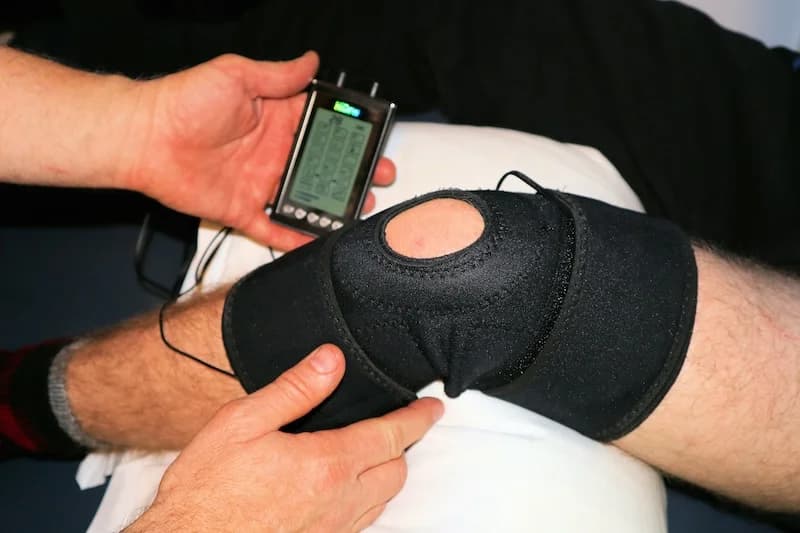
Knee braces:
- Provide compression and support
- Can reduce pain during activity
- Consult a doctor for proper fit
- Not a substitute for strengthening
Adjust Your Stride
How you walk affects your knees:
Helpful adjustments:
- Take shorter steps
- Land with a slightly bent knee (not locked)
- Keep your weight centered
- Avoid leaning forward excessively
Avoid:
- Overstriding (reaching too far forward)
- Landing on a straight, locked knee
- Twisting movements while walking
Warm Up Properly
Cold joints are stiff joints:
Before walking:
- Gentle range of motion exercises
- Ankle circles and knee bends
- 2-3 minutes of very slow walking
- Gradually increase pace
Consider:
- Warm compress on knees before walking
- Warming up indoors before going outside in cold weather
Ice After Walking
If knees are sore after walking:
- Apply ice for 15-20 minutes
- Use a thin cloth between ice and skin
- Elevate legs if possible
- Ice reduces inflammation
Sample Progressive Walking Plan for Knee Pain
This plan builds up slowly to avoid flare-ups.
Week 1-2: Baseline
Goal: Find your comfortable starting point
Pain rule: If pain increases during walking, stop. If pain is worse the next day, reduce duration.
Week 3-4: Building
Goal: Slightly increase duration if Week 1-2 went well
Week 5-6: Progressing
Goal: Add one more walking day
Week 7-8: Establishing
Goal: Reach a sustainable routine
Progress should be gradual. If any week causes increased pain, repeat that week or go back a week. There is no rush. Consistency over months matters more than progress over weeks.
Progression Rules
Advance to the next week if:
- No increased pain during walks
- No increased pain the day after
- You completed most walks as planned
Stay at current week if:
- Mild discomfort during some walks
- Occasional soreness the next day
- You missed more than one walk
Go back a week if:
- Pain increased during walks
- Pain worse the day after
- You could not complete walks as planned
How to Track Progress Without Obsessing Over Daily Steps
With knee pain, daily step counts can be misleading. Focus on trends instead.
Why Daily Counts Are Less Useful
Daily step counts do not account for:
- Pain levels that day
- How you felt during walking
- Whether you used modifications
- Overall progress over time
A "bad" day with 2,000 steps might be a win if your knees were hurting. A "good" day with 6,000 steps might be a mistake if you pushed too hard.
What to Track Instead
Focus on:
Weekly averages: More meaningful than daily totals Pain levels: Rate before and after walks (1-10) Duration tolerance: How long can you walk comfortably? Trend over months: Are you walking more than 3 months ago?
Using a Step Tracker Wisely

Steps App
FreeSteps App shows your weekly and monthly trends, not just daily counts. This long-term view helps you see real progress even when individual days vary due to knee pain. Set a flexible daily goal and focus on your weekly average instead of hitting an exact number every day.
Setting Appropriate Goals
For people with knee pain:
Start with:
- A goal based on your current comfortable level
- Weekly goal instead of daily goal
- Flexibility to adjust on painful days
Example:
- Current comfortable level: 3,000 steps
- Initial goal: 3,500 steps average
- Increase by 500 steps every 2-4 weeks if pain allows
Celebrating the Right Wins
Celebrate:
- Walking consistently (not just step counts)
- Reduced pain levels over time
- Increased duration tolerance
- Better function in daily life
Do not focus on:
- Hitting arbitrary step goals
- Comparing yourself to others
- Daily numbers on bad days
Additional Tips for Walking With Knee Pain
Here are more strategies to make walking work for you.
Strengthen Supporting Muscles
Walking alone may not be enough. Add:
Quadriceps strengthening:
- Straight leg raises
- Wall sits (pain-free range only)
- Step-ups (low step)
Hip strengthening:
- Side leg raises
- Clamshells
- Hip bridges
Stronger muscles around the knee reduce joint stress.
Maintain Healthy Weight
Every pound matters for knee pain:
- Combine walking with healthy eating
- Focus on sustainable weight loss
- Even small losses help significantly
- Do not crash diet (muscle loss hurts joints)
Consider Water Walking
If land walking is too painful:
- Pool walking reduces joint stress by 50-75%
- Water provides resistance for strengthening
- Many pools offer warm water therapy
- Good option during flare-ups
When to See a Doctor
Seek medical attention if:
- Pain is severe or getting worse
- Knee swells significantly
- You cannot bear weight
- Knee locks or gives way
- Pain does not improve with rest
Medications and Supplements
Discuss with your doctor:
- Over-the-counter pain relievers
- Topical pain creams
- Glucosamine and chondroitin (mixed evidence)
- Prescription options if needed
The Bottom Line
Walking with knee pain is not only possible but often beneficial. The key is starting slowly, modifying on painful days, and progressing gradually.
Key takeaways:
- Walking helps knee pain by nourishing cartilage and strengthening muscles
- Modify distance, pace, and terrain on painful days
- Progress slowly and listen to your body
- Focus on weekly trends, not daily step counts
- Weight loss reduces knee stress significantly
- Seek medical advice if pain is severe or worsening
Your knees need movement to stay healthy. With the right approach, walking can be part of your knee pain solution, not the cause of more problems.
References
Free calculators for this topic
Related Posts

How Many Steps to Burn 500 Calories Walking?
Burning 500 calories walking takes roughly 10,000–17,500 steps for most adults. See the exact step count for your body weight and pace, plus a sample day plan.

How Many Calories Does 15,000 Steps Burn? (By Weight & Pace)
15,000 steps burns roughly 450–750 calories for most adults. Get the exact breakdown by body weight and pace, plus whether it's worth the effort.

How Many Calories Does 10,000 Steps Burn? (By Weight & Pace)
10,000 steps burns roughly 300–500 calories for most adults. See the exact breakdown by body weight and walking pace, plus the formula behind the math.